The following is a Swedish adaptation of an article from the research journal mongabay.com
Large areas of forest have been cleared by logging, degraded by a range of other human activities, consumed by wildfires and ravaged by invasive insects. Restoring these forests is crucial to halting global climate change and saving wild species from the brink of extinction. But the challenge we face is huge and time is short.
While some forests can recover naturally with the right protection and support, others need more intensive help in the form of replanting. This need has given rise to heavily publicised tree planting projects that tackle the challenge manually by sending thousands of volunteers into the field to plant saplings by hand, one by one.
While inspiring, these efforts are also labour-intensive and difficult to organise, and they cannot reach degraded land that is inaccessible by road or where volunteers are few. More importantly, they cannot achieve reforestation on the planet-wide scale or timeframe required to address the climate and biodiversity crisis and meet international reforestation targets.
Whatever methods humanity chooses to restore millions of hectares of lost and destroyed forest in the 21st century, it will require a Herculean effort. But in the absence of Hercules, it seems that robots can do the job.

Drone seeding companies lead the way
Drone seeding with the latest robotic technology - delivering seeds directly to where they are needed - is a high-tech solution that is gaining ground.
Early designs required each drone to be remotely controlled by an experienced drone pilot. Newer drones can autonomously drop seeds along a predefined route and work together in a 'swarm' controlled by a single human supervisor. This advance in artificial intelligence is changing the playing field for reforestation in remote and inaccessible locations.
Aerial seeding companies - some developing their own versions of robotics, others adapting commercially available models - are emerging in industrialised countries, but the use of seed drones has yet to really take off in the tropics and elsewhere in the developing world.
Mast Reforestation, a company based in Seattle, Washington, is focusing its drone seeding programme on North America's fire-ravaged coniferous forests. Every large-scale wildfire is "such a big step backwards," says Matthew Aghai, Mast's vice president of research and development. And "we still don't have scalable tools to deal with them." Mast sees itself as part of this scaling-up process.
When the company was founded in 2015, then under the name DroneSeed, there were no commercially available drones suitable for the job. So the company created its own drone design. "We built customised aircraft that were huge," Aghai recalls. In fact, they were so large and sophisticated in their design that the company needed to work with the US Federal Aviation Administration to develop rules that would ensure drone seeding went smoothly and safely.
In 2022, Mast Reforestation combined drone seeding with manual planting of seedlings in the Henry Creek reforestation project, which reforested about 121 hectares in western Oregon, USA. The company predicts that the project will remove more than 200,000 tonnes of carbon dioxide from the atmosphere over the next 200 years.
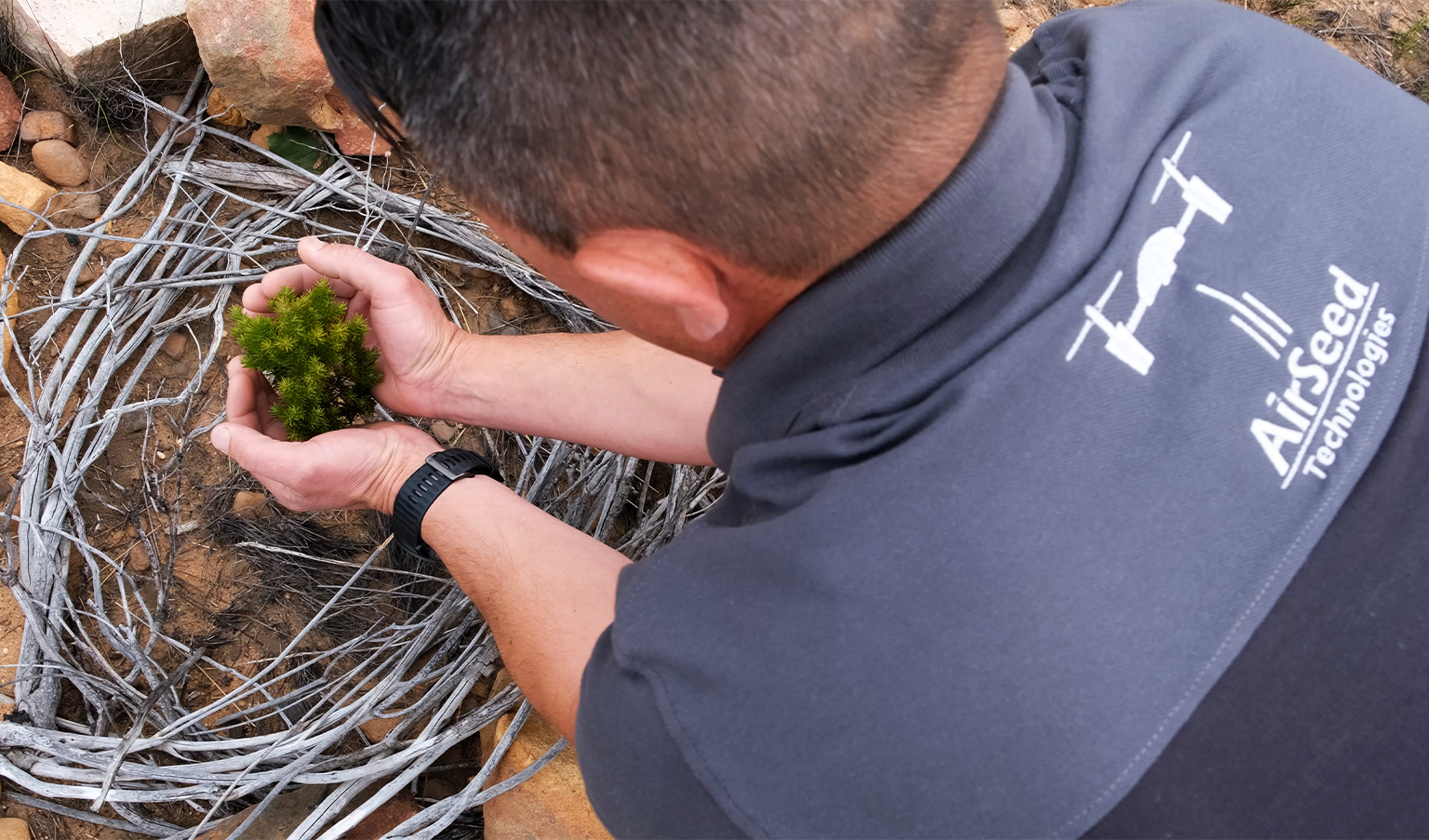
In Australia, the AirSeed Technologies aims to restore natural forests that have been logged, burned and flooded. "There is a huge amount of land in Australia that is ripe for restoration," says Charlotte Mills, chief ecologist at AirSeed. But "standard [manual] methods are insufficient to meet the challenge at scale."
The company has developed specialised seeding drones equipped with artificial intelligence to speed up and scale up the replanting process. AirSeed's drones can plant seeds 25 times faster than manually planted seedlings and release up to 40,000 seed pods per day in remote, hazardous and inaccessible areas. The company's goal is to release 100 million seed pods per year by 2024.
AirSeed recently worked with the MidCoast Council in Australia to restore koala habitat lost to forest fires in the Cattai wetlands of New South Wales. Using their drones, they released seeds for swamp mahogany, an important native food plant for these vulnerable marsupials. They are also testing their technology to recreate flood-damaged forests in Lismore, New South Wales.
Companies and NGOs around the world are using drones to reforest damaged land. UK-based environmental technology company Dendra Systems uses drones to spread seeds faster and more safely in remote areas. It recently partnered with WWF Australia, the Australian government and the Turner Family Foundation to replant more than 20 000 hectares of degraded forests in Australia.
In Africa, World Vision Kenya, in partnership with Kenya Flying Labs, is using drones to plant indigenous trees on degraded lands in Tana River County. Drone company Seedcopter is pioneering drone seeding to restore India's forests, and in Canada, Flashforest is using drones to restore forests ravaged by wildfires. Spanish non-profit Dronecoria produces open-source forestry technologies, including drones for seeding and seed coating machines.

Streamlining the reforestation process
Aerial seeding is still in its infancy, but some entrepreneurs are hoping that drones will revolutionise reforestation efforts. Researchers and companies have already made great strides in making these robotic techniques more efficient and cost-effective, but there are major challenges in scaling up these operations further.
Major logistics and infrastructure issues need to be particularly addressed. For all tree planting projects, but especially for aerial seeding projects that have to overcome low germination rates, sources have to be found or created for large quantities of seeds from different native species. It is only the first step in a long and complex reforestation supply chain. Once collected, the seeds must be properly stored and then transported undamaged to the starting point.
The availability of seed remains a major obstacle to large-scale reforestation, whether through drone seeding or manual planting of seedlings. "Seed is a limited resource; it's best to use it conservatively," explains Mills.
Reforestation on a large scale requires huge amounts of seeds. Estimates show that it would take between 8 and 45 billion seeds to replant about 10 million hectares of lost and damaged forest in the western United States. Across the US, private and public seed banks dedicated to public reforestation "have about three to five years' worth of seeds before we run out," says Mr Aghai.
He emphasises the key role that large-scale collection of quality seeds must play in a global reforestation effort: "It all starts with seeds, because that's your genetic material," Aghai notes.
Building a well-developed seed supply chain is crucial for large-scale drone planting, but it is also important to carefully prepare sites for reforestation. Once a planting site has been selected, Australia's AirSeed team visits the site to map the terrain, determine soil quality and existing vegetation, and take high-resolution aerial landscape images, which help the company develop a reforestation plan. "The initial mapping images are critical to the planning of our planting missions," notes Mills.

Ingredients for success
When it comes to seeds, robots are still not as effective as an enthusiastic volunteer with a shovel. Seeds dropped by drones or other aerial vehicles are much less successful than seedlings planted manually.
"One of the big challenges with drone seeding is low germination," says Lining Yao, a mechanical engineer at Carnegie Mellon University. Low germination can be caused by many factors, including seeds falling on poor soil, bird and insect infestation, and improper storage or handling of seeds before planting.
Another major challenge: the need to simultaneously disperse seeds from a variety of plant species to achieve a more natural forest with greater biodiversity. "It's a huge challenge to create designs [for aerial seeding] that can plant across the whole spectrum of seed types," explains Mills. There is "a huge variation in the size, shape, mass and external characteristics of the seeds that these plants produce." Many types of seeds need to be collected together before planting, and each species is likely to have different handling requirements.
Pre-planting seed logistics also make drone seeding difficult, as many seeds have specific, and sometimes complex, dormancy requirements to achieve successful germination. For example, many plants in temperate climates produce seeds that fall from the tree in autumn and overwinter before germinating in spring.
To simulate these natural conditions, drone companies, researchers and restorers need to develop "mechanical or chemical intervention, or a stratification period where you have a morphophysiological dormancy that requires moisture and temperature [standards] for a period of time to reawaken the seed," says Aghai.
"We want to increase the probability of a single seed transforming into an established plant," says Aghai. "It's an exercise in biomimicry." Mast Reforestation initially adapted its seeding methods to the specific germination requirements of species native and ecologically important to the temperate forests of the western United States, where the company operates, such as ponderosa pine and Douglas fir.
The timing of seed dispersal is also crucial. In the western United States, for example, the optimal sowing period for conifers is late autumn, when there will be enough rainfall for the seeds to break dormancy, germinate and thrive - although that timing may change as climate change evolves.

Maximise every seed's chances
After collecting seeds, Mast Reforestation follows up with a simulated resting period and then carefully loads the prepared seeds into custom-built seed capsules the company calls 'pucks'. Each puck contains seeds along with a mixture of compressed natural fibres, minerals and other nutrients designed to "create a suitable microenvironment ... very similar to the one in which a seed would fall and germinate most optimally", Aghai explains.
The pucks are transported to the reforestation start site along with drones and the planting team, which consists of professional drone pilots and visual observers. "It looks like a Formula 1 depot," jokes Mr Aghai, "except we're on a mountainside ravaged by forest fires."
Each drone takes off, loaded with pucks, drops them over a predefined route and then returns for reloading. The faster the team can reload, the more efficient the planting project will be. "It's a bit of an orchestration," Aghai adds.
The already completed drone surveys of the site allow the team to create a roadmap that the seeding drones follow. "They basically go out there armed with a mission plan to drop these pucks in a very specific location based on a recipe written out by a restoration expert," he explains.
AirSeed has also designed customised carriers to give seedlings a good start in life. "AirSeed's seed pod biotechnology includes products with microbial, nutritional and carbon sequestration properties," says Mills. Each ingredient can be tailored to the species to ensure "the best possible germination ... and the best possible chance of survival for the resulting seedlings". The extra weight of the seed capsule also reduces the risk of the seeds blowing away from the site with the wind.
Some flying robots now even have an extra effect: AirSeeds capsules contain a carbon charge that is deposited in the ground when they land. "This means that our [seeding] solution has the unique ability to both slow the damage to the soil by sequestering carbon dioxide and heal the damage that has already been caused to the forests," explains Mills.
Smart seed carriers
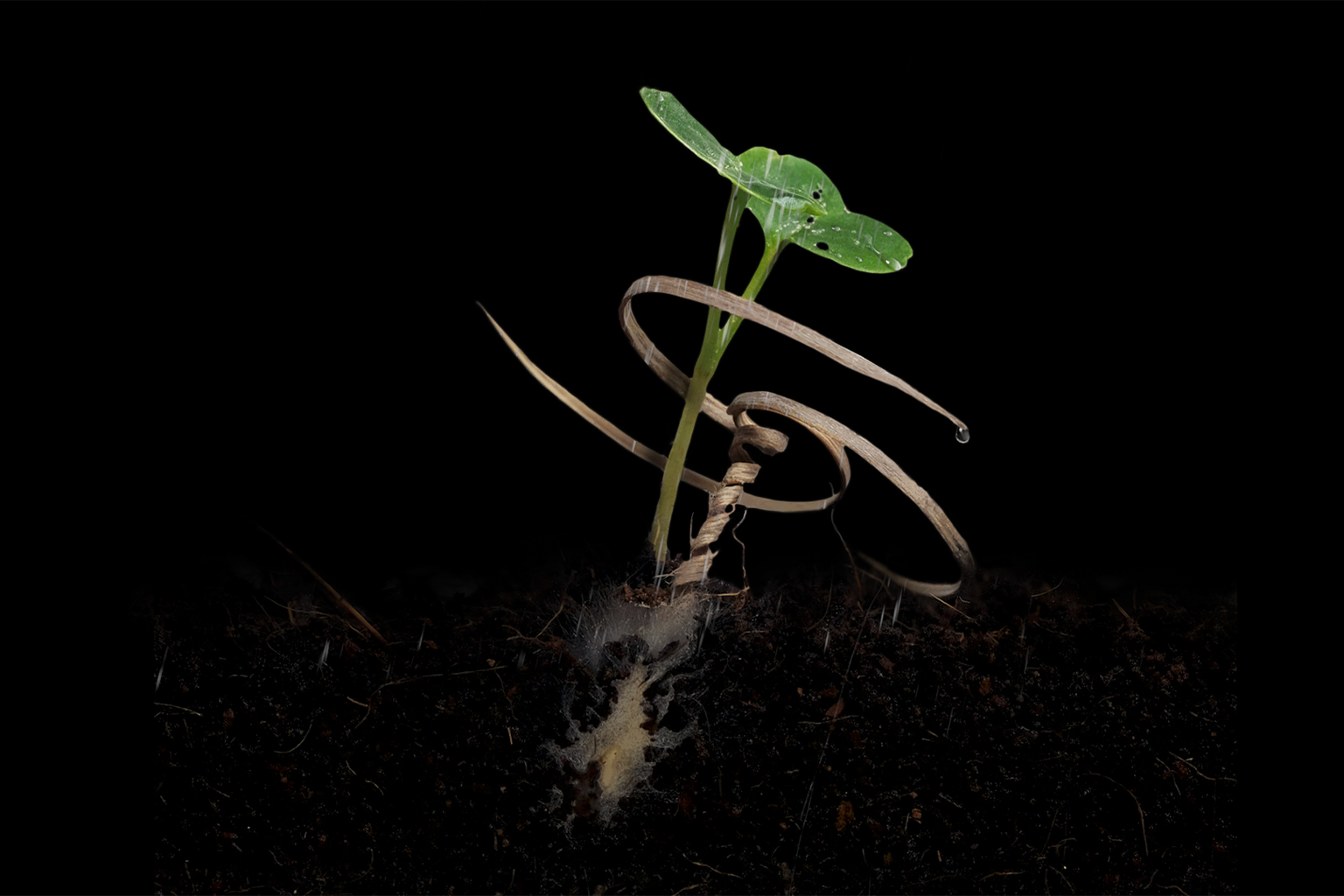
Researchers are devising new methods to increase the germination rate of seeds dropped by drones. Yao and her team at Carnegie Mellon University have developed a self-digging seed carrier that, after being dispersed by a drone, can gently drill each seed into the soil. The carrier has been inspired by the structure of seeds from Erodium plants and does not require a battery pack; the burrowing effect is generated by the shape of the material itself.
"The coiled body stretches out when it rains, creating a downward pushing force that allows the spike to bury itself in the soil," Yao explains. Burying the seed, rather than leaving it on top of the soil, can protect it "from wind, drought or birds", she says. Although this system is not yet ready for mass production, the design has shown promising results in laboratory and field tests.
Monitoring becomes crucial after planting, as it provides growth data that can improve drone seeding technology and results. However, making detailed long-term observations at scale remains a formidable budgetary and logistical challenge, especially in the remote locations where drone seeding is most effective. Each AirSeed pod is GPS-tagged, allowing the team to return to a precise location to monitor the seedlings from planting to maturity.
The future of global robotic forestry
The development of drones has been very fast, many technical barriers have been overcome and drones have become a sustainable solution for large-scale reforestation projects. "Drones are an essential part of the restoration toolbox," explains Mr Mills, and they bring the goal of "restoring and replanting all damaged land within reach".
Of course, major challenges remain, and proponents of drones agree that aerial seeding is not the right solution for all reforestation projects. "The purpose of aerial seeding, in my opinion, is to add another tool to the toolbox of anyone working in reforestation or restoration," says Aghai.
What is important, he adds, is to be "extraordinarily careful and focused on where the technology can actually be applied successfully today". That's why Mast has so far focused his efforts mainly on temperate coniferous forests in North America.
Applying this robotic technology to reforestation in developing countries in tropical climates, with their overwhelming complexity of tree species and sometimes limited infrastructure, is extremely challenging, the experts say. Large-scale precision seeding with drones like Masts is "really an industrial solution for the developed world," Aghai says, and requires extensive training, energy infrastructure and access to professional drone mechanics.
Add to this the fact that humanity lacks knowledge of most of the world's 73 000 tree species - a knowledge gap that is particularly large in the tropics where deforestation is widespread and reforestation is urgently needed. There are an estimated 12 500 tree species in the Amazon alone.
Generating the giant seed resources and infrastructure needed to equip large squadrons of drones to repopulate devastated forests around the world remains a Herculean task that is out of reach for now. But given the progress already made, it is conceivable that large-scale investment from industrialised countries, companies and NGOs could one day bring robots to tropical skies to restore Earth's rainforests.


